nobodywasishere
It works as expected, with non-quoted words getting quoted, and quoted words being left as-is.
I'm not sure that “it works as expected” is the best way to describe it when people in this discussion are reporting that double quotes do not behave as expected.
I was also asking about combining Verbatim with double quotes. Kagi's quick summary gave me this explanation:
Using Verbatim and double quotes together in Kagi is redundant but functional: Verbatim forces the entire query as an exact phrase, while double quotes force only the quoted segment as an exact phrase. If you enable Verbatim (the v: prefix or the Verbatim toggle), the whole query is already treated as one exact string, so adding quotes inside it doesn't further restrict matching—the phrase is already locked.
If that explanation is correct, why does searching for "be here now" return 25 results, while searching for it with both double quotes and Verbatim returns only 17? What causes this difference? Am I misunderstanding how these features interact?
I also get different results for each of the following queries:
(foo bar)(foo AND bar)foo barfoo AND bar
Could you explain how Kagi interprets each one? When I search for foo bar, isn't an AND relationship implicitly applied because I'm searching for both foo and bar? Why do adding parentheses and/or explicitly writing AND change the results number?
Feel free to make an Kagi post.
Is there a technical or organizational reason why this needs a separate Kagi post? Since the issue is directly related to this discussion, I would prefer to continue here rather than create another thread about the same behavior.
Regarding wildcards:
It matches foo * bar exactly. We don't do any special handling for wildcards outside site: operators.
However, the search-operator documentation says:
* — Matches any word, for example: best * ever
I'm having trouble reconciling these two statements. How should I search for a phrase in which foo comes first, bar comes afterward, and one or more unknown words may appear between them?
For example, I would expect "foo * bar" to preserve the word order while allowing * to represent the unknown word or words. Google supports similar wildcard behavior both inside and outside double quotes: inside double quotes, the wildcard represents an unknown word while preserving the surrounding word order; outside double quotes, the terms do not necessarily form an exact phrase.
Does Kagi support this behavior? If not, could the documentation clarify the limitation and provide the correct syntax, if one exists?
Feel free to make another Kagi post.
Again, I don't understand why a separate discussion is necessary when this question follows directly from the documentation and the behavior already being discussed here. If there is a specific reason for moving it, please explain.
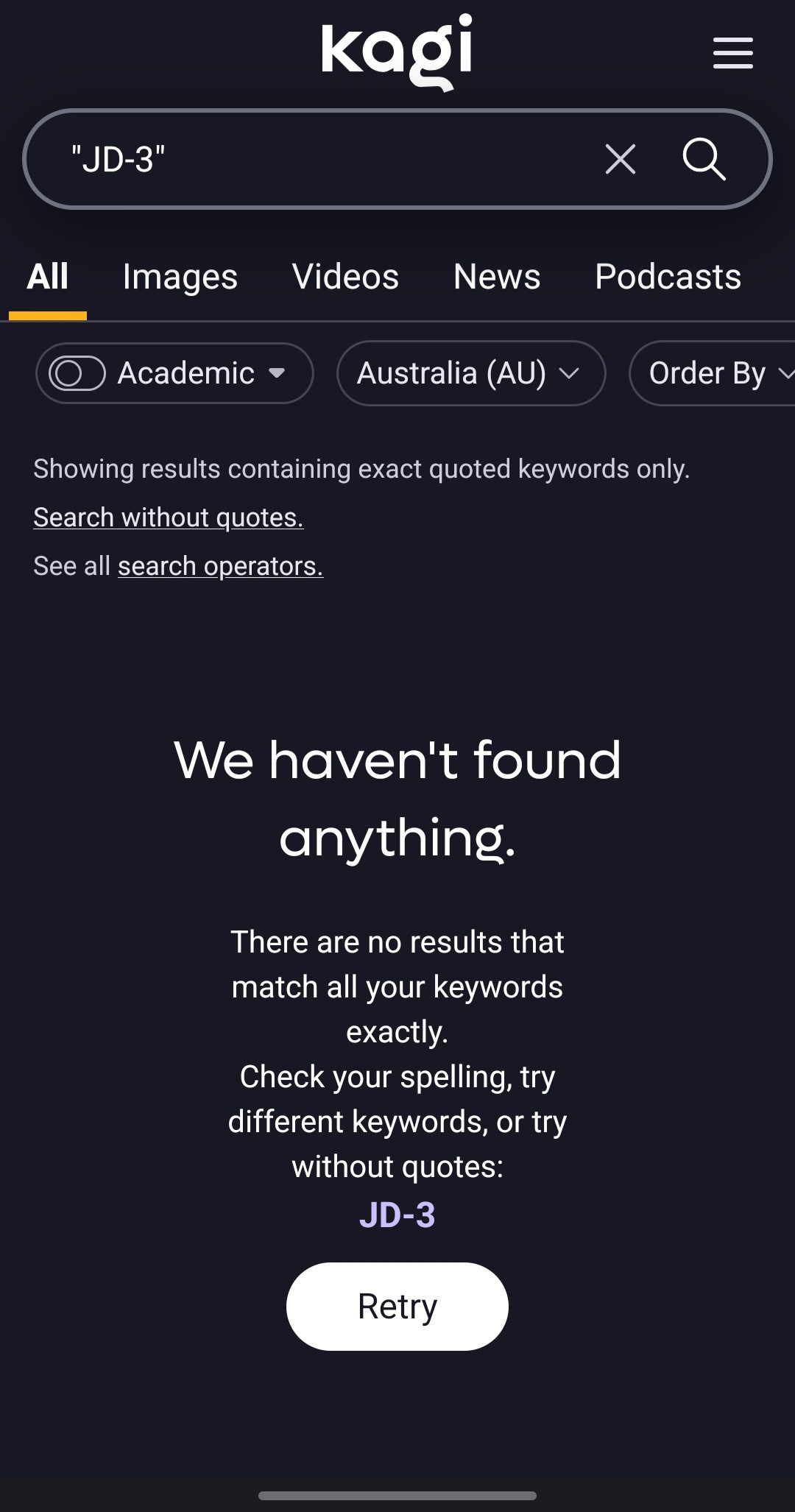
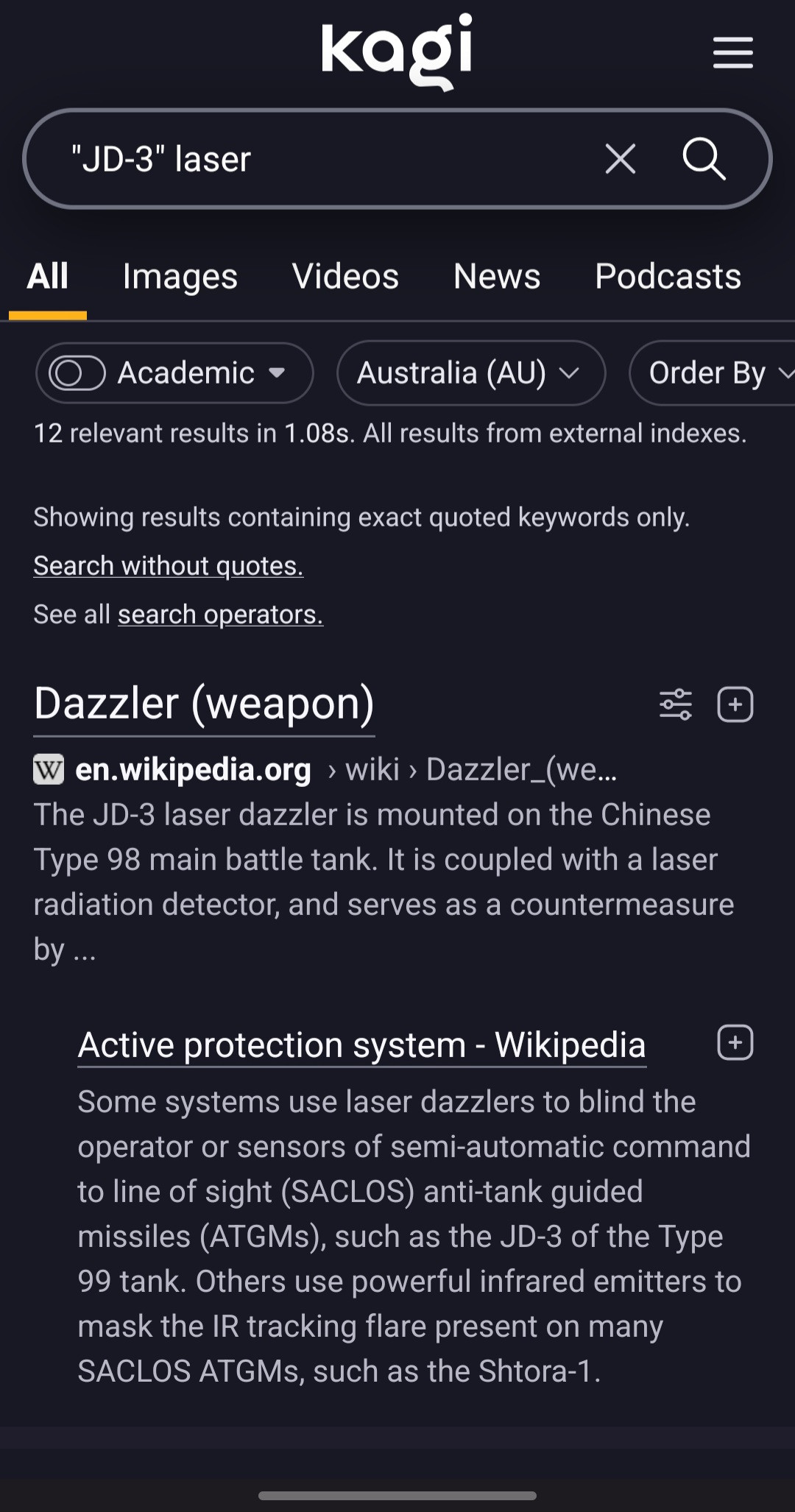
One last thing: could you explain what is happening here?
I'm not trying to be difficult. I'm trying to understand the intended syntax and determine whether the behavior I'm seeing is expected, a limitation, or a bug.
Sorry, and thank you again.