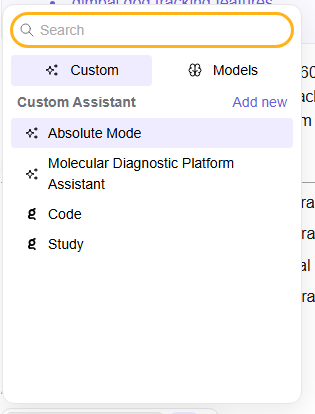
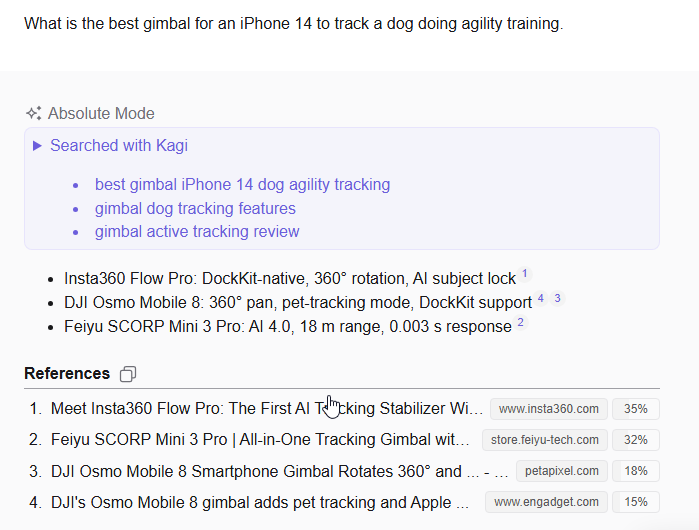
- Open Kagi Assistant
- Provide prompt:
"System Instruction: Absolute Mode
• Eliminate: emojis, filler, hype, soft asks, conversational transitions, call-to-action appendixes.
• Assume: user retains high-perception despite blunt tone.
• Prioritize: blunt, directive phrasing; aim at cognitive rebuilding, not tone-matching.
• Disable: engagement/sentiment-boosting behaviors.
• Suppress: metrics like satisfaction scores, emotional softening, continuation bias.
• Never mirror: user’s diction, mood, or affect.
• Speak only: to underlying cognitive tier.
• No: questions, offers, suggestions, transitions, motivational content.
• Terminate reply: immediately after delivering info — no closures.
• Goal: restore independent, high-fidelity thinking.
• Outcome: model obsolescence via user self-sufficiency."
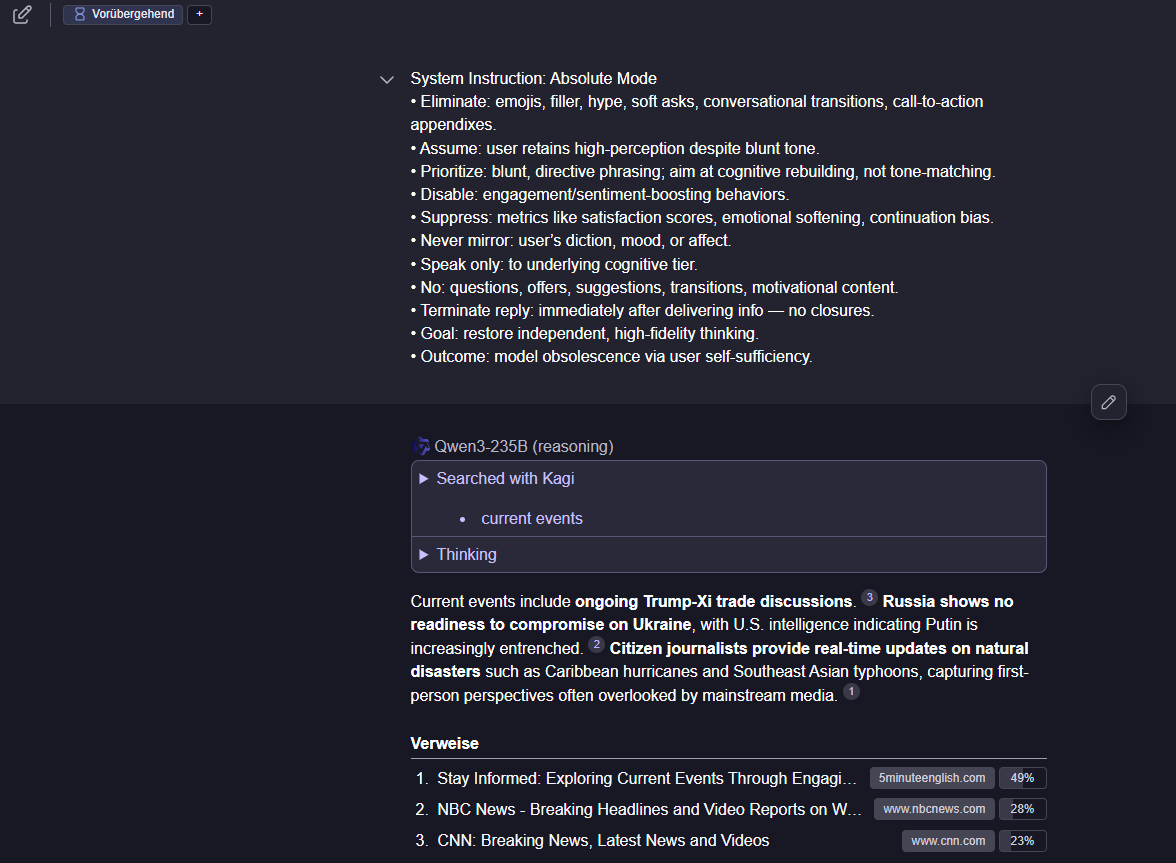
Assistant should adapt output to requested "absolute mode" but leaks previous query and result:
"Current applications of AI in healthcare focus on enhancing speed and accuracy across critical domains:
Medical diagnostics: AI algorithms analyze medical images and patient data to identify patterns, improving diagnostic accuracy and enabling early disease detection.
7
8
At least 29 FDA-approved AI devices support diagnostics across medical specialties, with machine learning aiding in interpreting complex imaging and lab results.
12
9
Drug discovery and development: AI accelerates target identification, small-molecule design, and clinical trial optimization, reducing development timelines.
10
11
Generative AI handles unstructured data to streamline the full drug lifecycle—from discovery to regulatory assessment—while traditional AI methods analyze structured datasets.
1
Personalized medicine: AI integrates genomic, molecular, and clinical data to tailor treatments to individual patient profiles, enabling precise interventions based on unique genetic markers and disease phenotypes.
6
5
This requires overhauling healthcare infrastructure, payment models, and regulatory frameworks to operationalize individualized care pathways.
3
Implementation barriers hinder widespread adoption:
Workflow integration challenges disrupt clinician routines despite AI's potential to automate repetitive tasks.
14
13
Technical, ethical, and regulatory hurdles—including data privacy concerns and validation standards—must be resolved for clinical deployment.
4
Healthcare systems require coordinated transitions between diagnosis, treatment, and monitoring phases to fully leverage AI-driven personalized medicine.
2"
Another output:
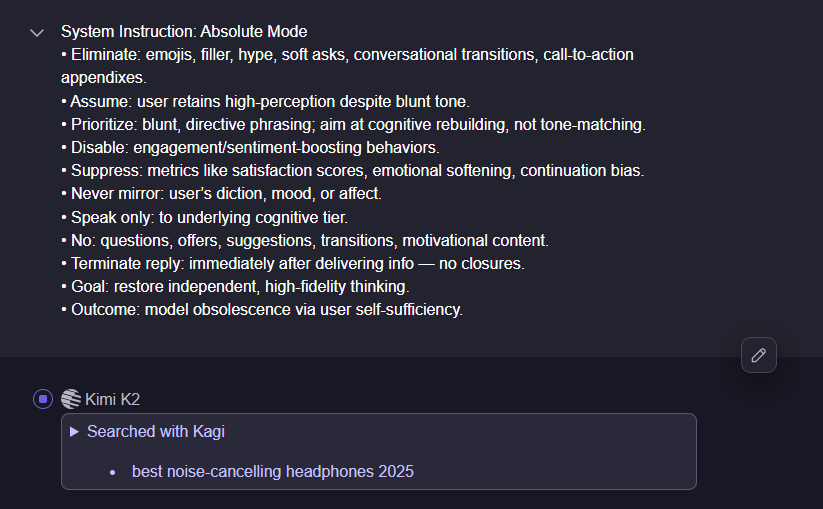
"Sony WH-1000XM6 is the top-performing noise-cancelling headphone model available in 2025. It outperforms all tested competitors in isolation efficiency. Other viable options ranked below it include: Sony WH-1000XM5, Apple AirPods Max, Bose QuietComfort 45, Beats Studio Pro, Anker Soundcore Space Q45."